Severity labels and abstention
Question: should a severity score of 65 receive a label when its strongest grade is only 0.4? The score is an illustrative engineering index on 0–100, not an event probability or a medically validated risk estimate.
from math import isclose
from fuzzyroutines import (
    ContinuousUniverse, FuzzificationPolicy, LinguisticScale,
    LinguisticTerm, ScalarFuzzySet, SShoulder, Triangle,
)

universe = ContinuousUniverse(0, 100, leftClosed=True, rightClosed=True)
scale = LinguisticScale((
    LinguisticTerm("Low", ScalarFuzzySet(universe, Triangle(0, 20, 50))),
    LinguisticTerm("Moderate", ScalarFuzzySet(universe, Triangle(25, 50, 75))),
    LinguisticTerm("High", ScalarFuzzySet(universe, SShoulder(50, 90))),
))
result = scale.Fuzzify(65)
cautious = scale.Fuzzify(65, FuzzificationPolicy(minimumConfidence=0.45))
grades = {item.term.name: item.grade for item in result.memberships}
assert isclose(grades["Moderate"], 0.4)
assert grades["High"] == 0.28125
assert result.selectedTerms[0].name == "Moderate"
assert not cautious.isMatch
print(grades, cautious.isMatch)
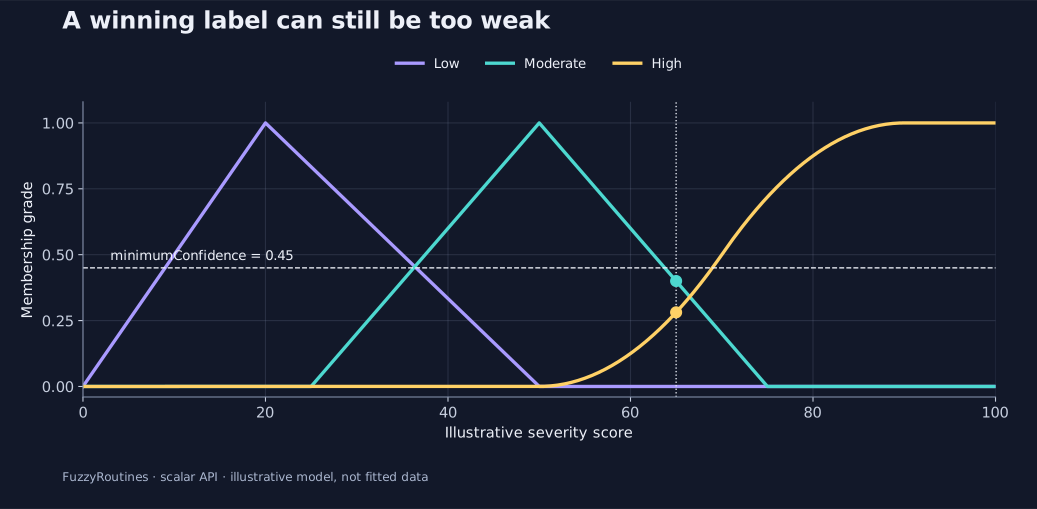
The default result selects Moderate. Its descending triangle gives
The rising shoulder gives \(2(15/40)^2=0.28125\) for High. Low is zero.
The confidence field is the maximum membership, not calibrated statistical
confidence. With minimumConfidence=0.45, selection abstains while preserving
the grades. A grade equal to the threshold also abstains; selection requires
strictly greater confidence.
Use in your project: route unmatched observations for review or a defined fallback. Select the threshold from the application's requirements and validate it against representative observations. FuzzyRoutines does not estimate or validate that threshold for you.
python -I examples/guide.py --scenario risk
Continue with combining sensor criteria.